Beginner Running Tips for Women Who Hate Running

Let's be honest, running is definitely not for everyone.
In fact, if you're searching for beginner running tips, there's a good chance you've tried running before and hated every second of it. Maybe you felt out of breath after a minute, worried people were judging you, or convinced yourself you simply weren't "a runner."
The good news? You don't have to love running to benefit from it.
At Peak Women, we believe movement should support your life, not make you miserable. Running can improve your mental health, boost your energy, strengthen your heart, and help you build confidence, but only if you approach it in a way that feels realistic and sustainable.
If you've always thought running wasn't for you, these beginner running tips may change your mind.
Key Takeaways
You don't have to love running to get started.
Run/walk intervals are often the best way for beginners to build endurance.
Running slower than you think you should helps make the experience more enjoyable.
Consistency matters more than speed or distance.
Strength training can help prevent injuries and improve running performance.
Rest and recovery are just as important as running itself.
A supportive community can make running feel less intimidating and more enjoyable.

Why Running Feels So Hard at First
Many women assume they're bad at running because they get tired quickly. The reality is that most beginners simply start too fast.
When you sprint out the door trying to run as hard as possible, your body quickly becomes overwhelmed. You end up exhausted, frustrated, and convinced running isn't for you.
The truth is that running is a skill. Just like strength training, building endurance and confidence takes time.
The goal isn't to become a marathon runner overnight. The goal is simply to get comfortable moving at your own pace.
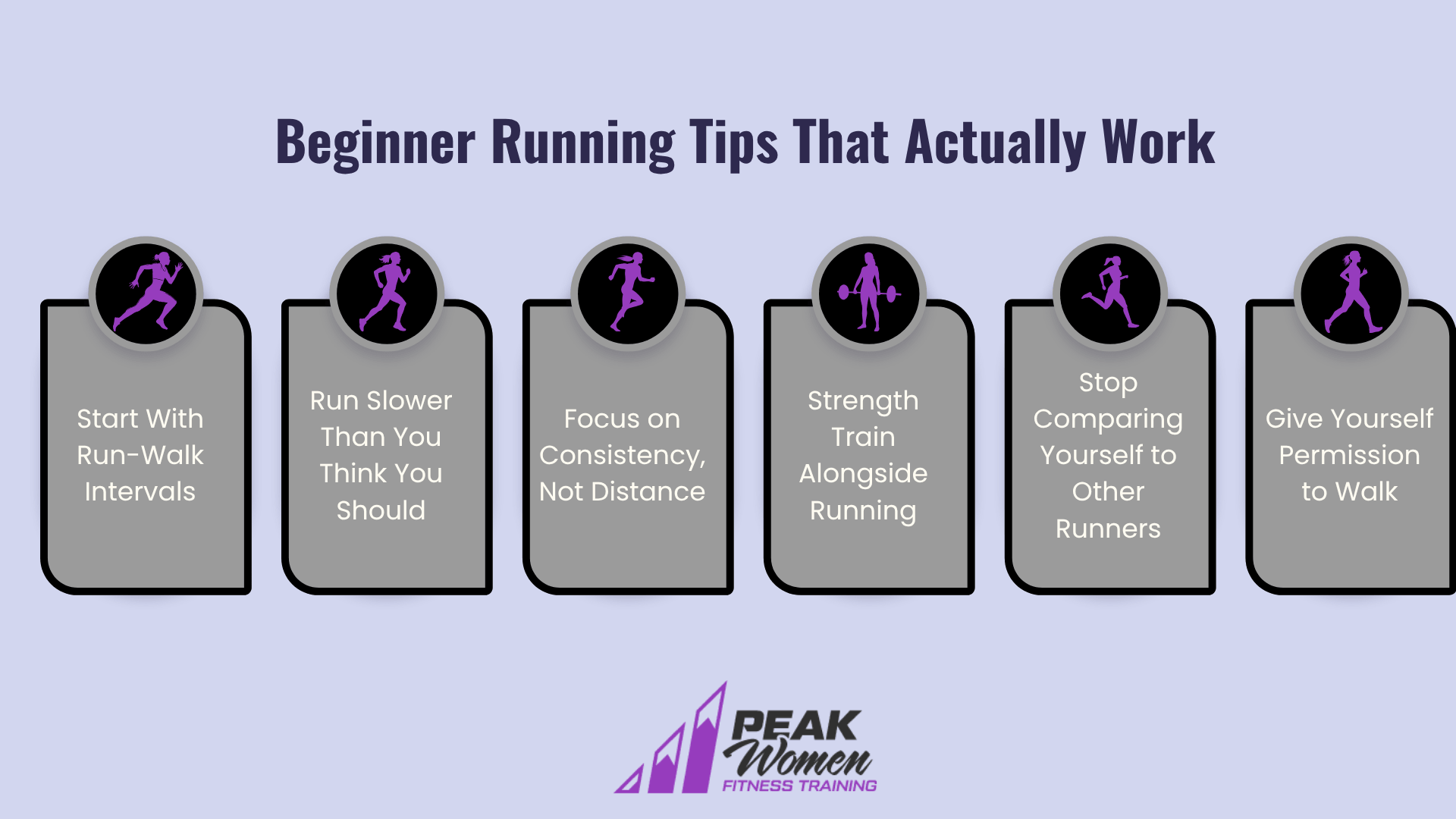
What Are Some Beginner Running Tips That Actually Work?
Our running tips for beginners can help you get started and stick with a new running routine.
Start With Run-Walk Intervals
One of the best beginner running tips is to stop trying to run continuously right away. Instead, alternate between short periods of running and walking.
For example:
Run for 30 seconds
Walk for 60–90 seconds
Repeat for 20–30 minutes
This approach helps build endurance without making every workout feel miserable. Many experienced runners still use run-walk intervals during training and races.
Run Slower Than You Think You Should
It may be tempting to go all in as soon as you start running, but that works against you.
This may be the most important tip in this entire article.
Most beginners run far too fast.
A good rule of thumb is that you should be able to hold a conversation while running. If you're gasping for air after 30 seconds, slow down.
Running at an easier pace helps:
Build aerobic fitness
Improve endurance
Reduce injury risk
Make running feel more enjoyable
Remember: you're building a habit, not trying to win a race.
Focus on Consistency, Not Distance
Many women quit because they focus on how far they can run. Instead of worrying about mileage, focus on showing up consistently.
Aim for:
Two to three running sessions per week
Rest days between runs
Gradual progress over time
Small, consistent efforts add up faster than occasional intense workouts.
Strength Train Alongside Running
You still have to train and exercise to become a better runner.
Strength training helps:
Improve running efficiency
Support proper form
Reduce injury risk
Build confidence
Exercises like squats, lunges, glute bridges, and core work can make a significant difference for beginner runners. At Peak Women, we often recommend combining strength training with running for the best long-term results.
Stop Comparing Yourself to Other Runners
One of the fastest ways to ruin your running experience is comparing yourself to someone who's been doing it for years. Social media often shows polished highlights, not the difficult beginnings.
Every runner started somewhere. Your pace or distance is irrelevant. What matters is that you're showing up and moving your body.
Give Yourself Permission to Walk
Walking isn't failing, it’s all part of the process. Many women think they need to run the entire time for the workout to count. That's simply not true.
Walking breaks can help you:
Recover during workouts
Stay motivated
Build endurance safely
Enjoy the experience more
If you need to walk, then walk!
We firmly believe the goal is progress, not perfection.
How To Stay Motivated When You Hate Running
We get it, it’s hard to stay motivated. Even as personal trainers, we sometimes have issues with motivation, and that’s okay! Here are a few running motivation tips to keep you going on those tough days.
Set Small Goals
Trying to run a 5K next week can feel overwhelming.
Instead, focus on smaller goals like:
Completing three workouts this week
Running for five consecutive minutes
Following your plan for a month
Small wins build confidence.
Find Your Why
Running becomes easier when you connect it to something meaningful.
Maybe you want to:
Reduce stress
Improve your energy
Sleep better
Feel stronger
Improve your mental health
Keep your reason front and center on difficult days.
Celebrate All Kinds of Progress
Don't wait until you hit a major milestone to be proud of yourself.
Celebrate:
Your first run
Your first mile
Your first week of consistency
Every workout you complete
Progress deserves recognition.
Listen to Your Body
Some discomfort is normal when you're starting something new. However, there's a difference between effort and pain.
Pay attention to warning signs such as:
Sharp pain
Swelling
Limping
Pain that worsens during exercise
It's okay to slow down, adjust your plan, or take an extra recovery day. The best running plan is one that keeps you healthy enough to continue.
Why Community Makes Running Easier
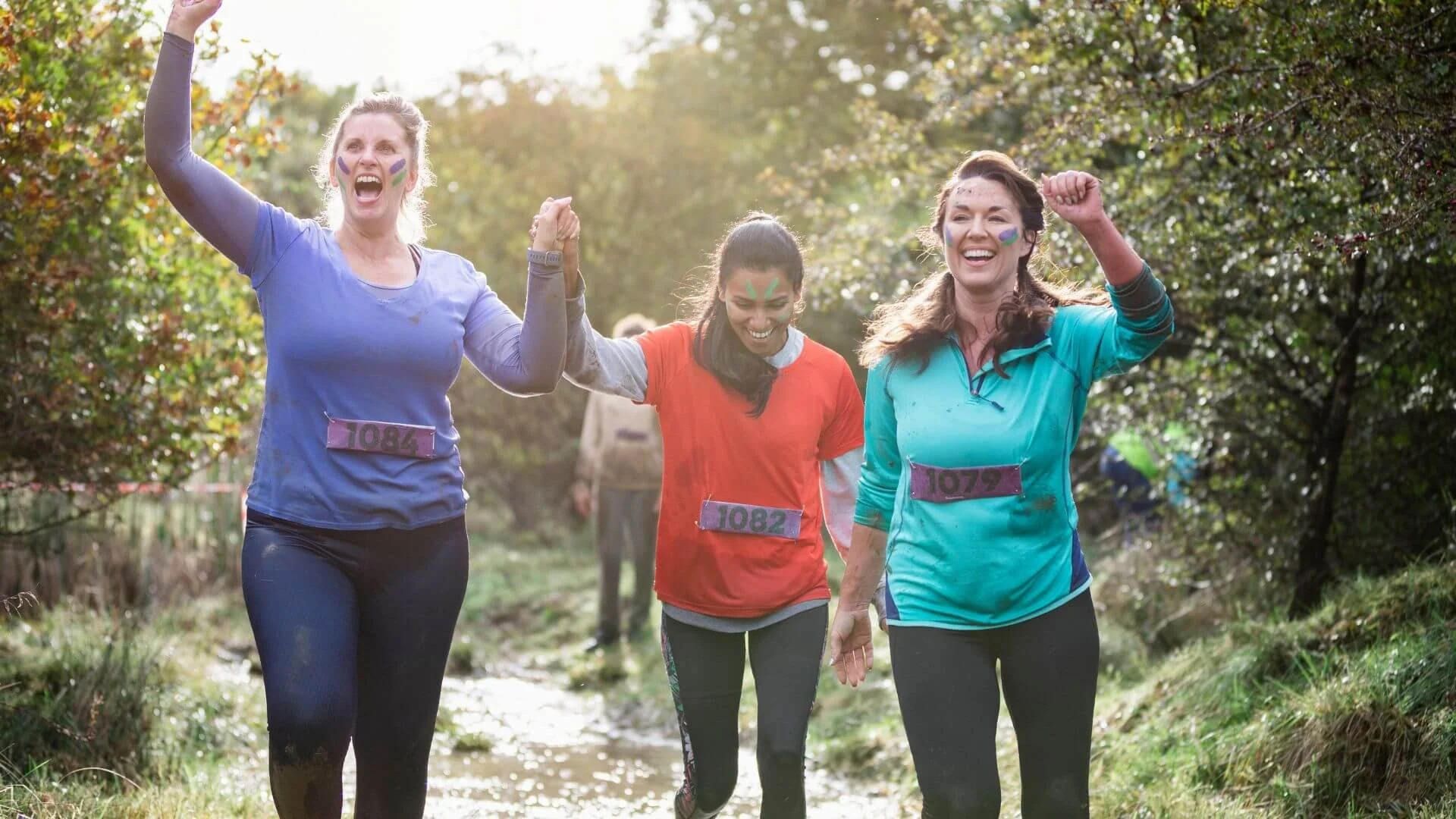
Running doesn't have to be a solo activity. Having support can make a huge difference when motivation is low.
Whether it's a friend, a coach, or a supportive fitness community, accountability helps you stay consistent.
At Peak Women, we see this every day. Women are often capable of much more than they realize; they just need encouragement and support along the way.
Running Doesn't Have to Be Miserable
The biggest misconception about running is that it has to feel awful.
It doesn't.
When you slow down, start small, stay consistent, and give yourself permission to progress gradually, running becomes much more enjoyable.
You don't need to be naturally athletic, fast, or even love running right away.
You just need to take the first step.
Beginner Running Tips With Peak Women
At Peak Women, we know trying something new can feel intimidating. That's why we've created a women-only gym where you can build strength, confidence, and endurance in a supportive environment.
Whether you're interested in running, strength training, or simply moving more consistently, we're here to help you create a plan that fits your life.
We’re here to tell you that fitness isn't about being perfect. It's about feeling stronger, healthier, and more confident one step at a time.
Reach out to us today and get your first workout free with your consultation.
Frequently Asked Questions About Beginner Running Tips
If you're new to running, it's normal to have questions. Here are some of the most common concerns we hear from women getting started.
How often should a beginner run?
Most beginners do well with two to three running sessions per week. This gives your body time to recover while still building consistency and endurance.
Is walking okay if I'm trying to become a runner?
Absolutely. Run-walk intervals are one of the best ways to build endurance safely. Walking isn't a sign of failure; it's a smart training strategy that many runners use.
How long does it take to start enjoying running?
Everyone is different, but many women find running becomes more enjoyable after a few weeks of consistent training. As your endurance improves, running often feels easier and more rewarding.
What should I do if I get out of breath quickly?
Slow down. Most beginners run too fast. Try running at a pace where you can still hold a conversation. If needed, add walking breaks until your fitness improves.
Do I need expensive running gear to get started?
No. A comfortable pair of running shoes and supportive clothing are enough. The most important thing is that you feel comfortable and confident while moving.
Is running good for stress relief?
Yes. Running can help reduce stress, improve mood, increase energy, and support better sleep. Many women find that running gives them valuable time to clear their minds and focus on themselves.
Should I strength train if I'm also running?
Yes. Strength training can help improve running performance, reduce injury risk, and build overall fitness. Exercises that strengthen your core, glutes, and legs are especially beneficial for runners.
What if I hate running?
That's okay. Many runners started out feeling the same way. Focus on going slowly, using run-walk intervals, and celebrating small wins. If you still don't enjoy it, there are plenty of other ways to stay active and healthy.
How far should I run as a beginner?
Focus on time rather than distance when you're starting out. Aim for 20–30 minutes of movement using run-walk intervals instead of worrying about how many miles you cover.
Can I start running if I'm overweight or out of shape?
Yes. Running is for everyone. The key is to start gradually, listen to your body, and progress at a pace that feels manageable. Many women begin with walking and slowly build up their running over time.