TL;DR: If you have no motivation to exercise, start with just five minutes of movement, set smaller goals, and choose activities you enjoy. A realistic routine and accountability can help you stay consistent without relying on motivation.

Some days, working out is the last thing you want to do. Maybe you're tired after work, your schedule is packed, or you've fallen out of your usual routine.
If you have no motivation to exercise, you're not alone. Even people who genuinely enjoy working out experience days when they'd rather stay home.
The good news? You don't have to wait until you feel motivated to start moving. Sometimes, taking a small step is exactly what helps you get going.
Let's explore why exercise motivation disappears and how to get back on track.
Why Do I Have No Motivation To Exercise?
If you've ever asked yourself, "why do I have no motivation to exercise?" the answer might be more complicated than simply not feeling like working out.
Your energy levels, daily responsibilities, and previous experiences with fitness can all affect your motivation.
Here are some common reasons you might struggle to get moving:
You're physically or mentally exhausted: Work, family responsibilities, stress, and poor sleep can leave you with little energy for exercise.
Your workouts feel repetitive: Doing the same exercises every week can make physical activity feel more like a chore than something enjoyable.
You're expecting results too quickly: When progress doesn't happen as fast as you'd hoped, it's easy to feel discouraged.
Your goals feel overwhelming: Committing to an intense workout schedule can feel impossible when you're already busy.
You don't feel comfortable at the gym: Not knowing what exercises to do or feeling self-conscious around others can make it harder to show up.
You've lost your routine: Taking time off for illness, vacation, or a busy season can make it hard to restart.
Understanding what's holding you back is important because different problems require different solutions.
If you're bored, you might need a new activity. If you're exhausted, you might need more rest. And if you're overwhelmed, a simpler workout routine could help.
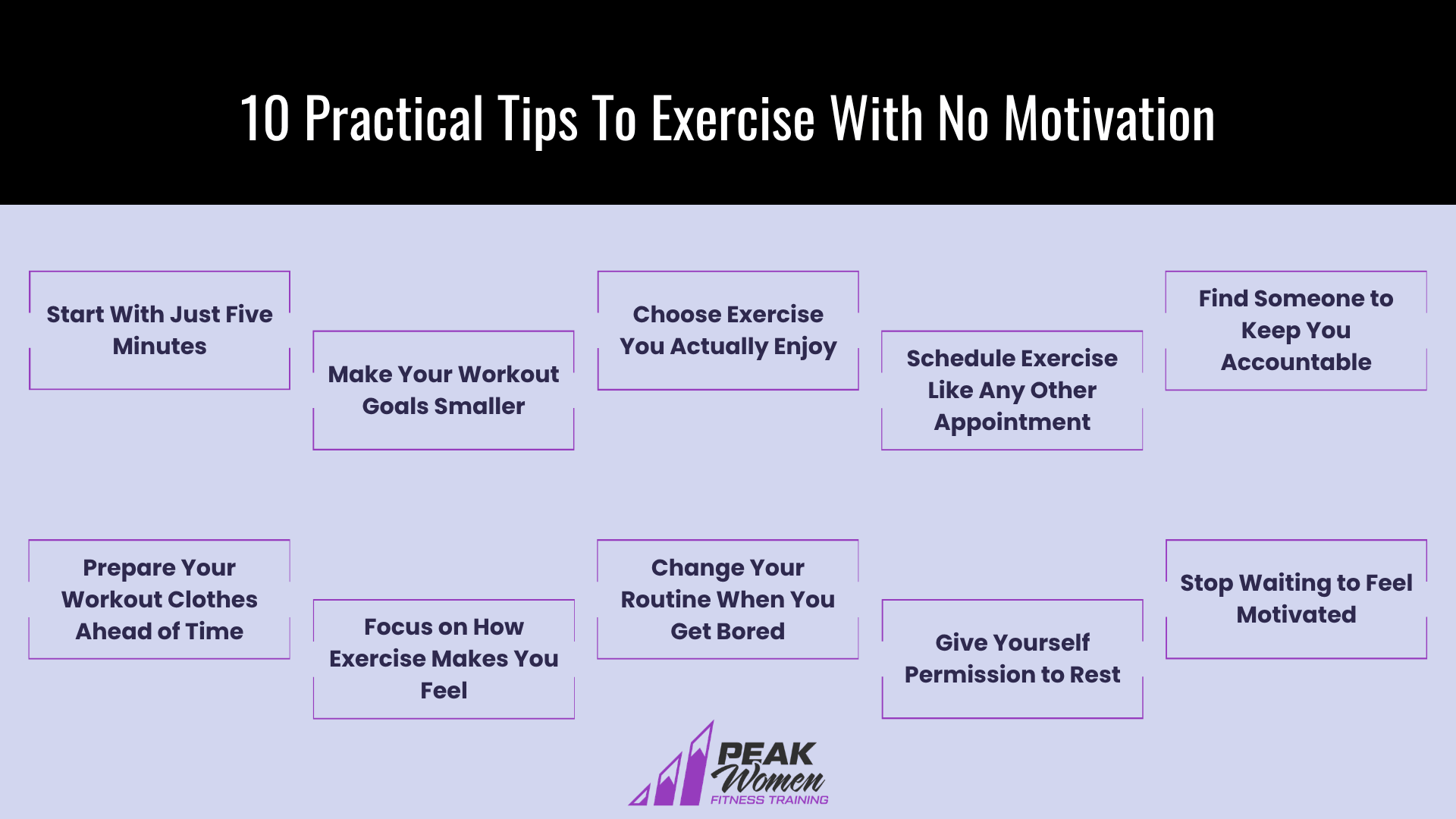
How to Exercise When You Have No Motivation: 10 Practical Tips
Learning how to exercise when you have no motivation doesn't mean forcing yourself through workouts you dread.
Instead, focus on making exercise easier to start, more enjoyable, and realistic for your lifestyle.
These 10 strategies can help.
1. Start With Just Five Minutes
When a full workout feels overwhelming, commit to moving for five minutes. Take a short walk, stretch, or do a few bodyweight exercises.
After five minutes, you might feel ready to continue. If not, that's okay, too.
The goal is to make starting feel manageable, not to pressure yourself to complete an entire workout.
2. Make Your Workout Goals Smaller
You don't need to exercise for an hour every time you work out. If you're struggling with motivation, try setting smaller goals that fit your current schedule.
For example:
Take a 10-minute walk after lunch.
Complete 15 minutes of strength training.
Exercise twice a week instead of committing to five days.
Do a few stretches before bed.
Smaller goals give you something achievable to work toward. As your routine becomes more consistent, you can gradually increase your activity.
3. Choose Exercise You Actually Enjoy
Not every workout is right for everyone.
If you dread running, you don't have to make it your primary form of exercise. If traditional gym workouts feel boring, try something different.
Walking, dancing, swimming, cycling, and strength training are all ways to stay active.
The best exercise routine supports your goals and is realistic for you to maintain.
4. Schedule Exercise Like Any Other Appointment
When your schedule gets busy, exercise is often one of the first things to disappear. Instead of waiting for free time to appear, set aside specific times for physical activity.
You might schedule a workout before work, during your lunch break, or after dropping the kids off at school.
Treat exercise like an appointment to build consistency without relying entirely on motivation.
5. Find Someone to Keep You Accountable
Working out with a group or another person can make exercise more enjoyable and give you an extra reason to show up.
In fact, Harvard Health highlights the importance of workout partners for staying motivated and consistent.
Ask a friend to join you for a walk, schedule workouts with a family member, or consider working with a personal trainer.
Having someone who encourages you and celebrates your progress can make a difference, especially on days when you're struggling to get started.
6. Prepare Your Workout Clothes Ahead of Time
Sometimes, the smallest obstacles make exercise feel harder than it needs to be.
If you're already tired, searching for your workout clothes or deciding what exercises to do might be enough to convince you to skip your session.
Try preparing everything in advance.
Lay out your clothes, pack your gym bag, fill your water bottle, and decide when you'll exercise. The fewer decisions you have to make, the easier it can be to follow through.
7. Focus on How Exercise Makes You Feel
It's easy to lose motivation when you focus only on long-term physical changes.
Instead of measuring progress solely by your appearance or the number on the scale, pay attention to how exercise affects your everyday life.
Maybe you feel less stressed after a walk, notice you're getting stronger, or find daily activities getting easier. That's one benefit of functional strength training, which focuses on building strength for everyday movements.
These improvements matter, even when they aren't immediately visible.
8. Change Your Routine When You Get Bored
If you've been following the same workout routine for months, a little variety might help.
Try a different strength training exercise, take your walk somewhere new, or invite a friend to work out with you.
You can also alternate between activities throughout the week. For example, you might strength train on Monday, walk on Wednesday, and enjoy a bike ride over the weekend.
Changing things up can keep exercise interesting while helping you work toward your fitness goals.
9. Give Yourself Permission to Rest
Not every day needs to be a workout day.
If you're unusually exhausted, sick, or experiencing significant muscle soreness, your body may need recovery rather than another intense workout.
Rest days are an important part of a balanced fitness routine. When appropriate, you can also choose gentle movement, such as stretching or walking.
Remember, taking a day off doesn't mean you've lost your progress.
10. Stop Waiting to Feel Motivated
One of the biggest misconceptions about exercise is that you need to feel motivated before you begin.
In reality, motivation comes and goes.
Some days, you'll look forward to your workout. Other days, you might need to rely on the routine you've established.
Rather than asking yourself whether you feel like exercising, focus on taking one manageable step.
Over time, consistent actions can help exercise become a regular part of your life.

What If You're Too Tired to Exercise?
There's a difference between not feeling motivated and being genuinely exhausted.
If you're tired because you've had a long day, a short walk or gentle workout might help you feel better.
However, if you're dealing with poor sleep, illness, ongoing fatigue, or significant stress, an intense workout may not be the best choice.
Listen to your body and adjust your activity accordingly.
If exhaustion persists or interferes with your daily life, consider speaking with a healthcare professional to understand what might be contributing to it.
The goal isn't to exercise at any cost. It's to find a healthy balance between movement and recovery.
How to Build an Exercise Routine That Lasts
Motivation comes and goes, but a realistic routine can help you stay consistent. Start with a few manageable workouts each week, such as:
Monday: 20–30 minutes of strength training
Tuesday: 15-minute walk
Wednesday: Rest or stretching
Thursday: 20–30 minutes of strength training
Friday: 15-minute walk
Weekend: Enjoyable movement and rest
Adjust your routine to fit your schedule and fitness level, gradually increasing activity as you get stronger. Remember, consistency matters more than perfection.
How Peak Women Can Help You Stay Motivated to Exercise
At Peak Women in Troy, Michigan, we offer one-on-one and shared personal training in a supportive, women-only gym.
Our trainers create workouts tailored to your goals and fitness level, with the guidance and accountability you need to stay consistent.
Whether you're new to exercise or getting back into a routine, we're here to help you build strength, confidence, and lasting fitness habits.
Contact us today and get your first workout free with your consultation.
Frequently Asked Questions About Exercise Motivation
Is It Normal to Have No Motivation to Exercise?
Yes! Motivation naturally fluctuates with stress, energy levels, and daily responsibilities. A realistic routine can help you stay consistent even on unmotivated days.
Should I Force Myself to Work Out When I Don't Feel Like It?
Not always. A short workout might help you get moving, but if you're sick, injured, or exhausted, rest may be the better choice.
How Do I Start Exercising Again After a Long Break?
Start with walking, stretching, or light strength training. Keep workouts short and gradually increase your activity as you get stronger.
How Long Does It Take to Make Exercise a Habit?
There's no set timeline. Focus on creating a manageable routine and staying consistent rather than expecting immediate results.
You Don't Need Motivation Every Day to Keep Moving
Having no motivation to exercise doesn't mean you can't build a lasting fitness routine. Start small, choose activities you enjoy, and remember that consistency matters more than perfection.