What's The Connection Between Physical Exercise and Mental Health?

If you've ever noticed that you feel calmer, happier, or more focused after a workout, you're experiencing the powerful connection between physical exercise and mental health firsthand. While many people begin exercising to improve their physical health, the mental and emotional benefits can be just as life-changing.
At Peak Women, we believe that movement is medicine and mental health is health. Exercise isn't about punishing your body or chasing perfection. It's about giving yourself the opportunity to feel stronger, more resilient, and more confident every day.
Key Takeaways
Physical exercise and mental health are closely connected through changes in brain chemistry and hormone regulation.
Regular movement helps reduce stress, anxiety, and symptoms of depression.
Strength training, walking, yoga, and group fitness all offer mental health benefits.
Consistency matters more than workout intensity.
Exercising in a supportive women-only environment can make it easier to build lasting healthy habits.
How Are Physical Exercise and Mental Health Connected?
Exercise affects far more than your muscles and cardiovascular system. Every time you move your body, your brain responds by releasing chemicals that help regulate your mood, lower stress, and improve emotional well-being.
Regular physical activity has also been shown to help lower stress hormones like cortisol while increasing circulation to the brain. Over time, these changes can improve focus, emotional resilience, and overall mental wellness.
The result is often a healthier body and a healthier mind working together.
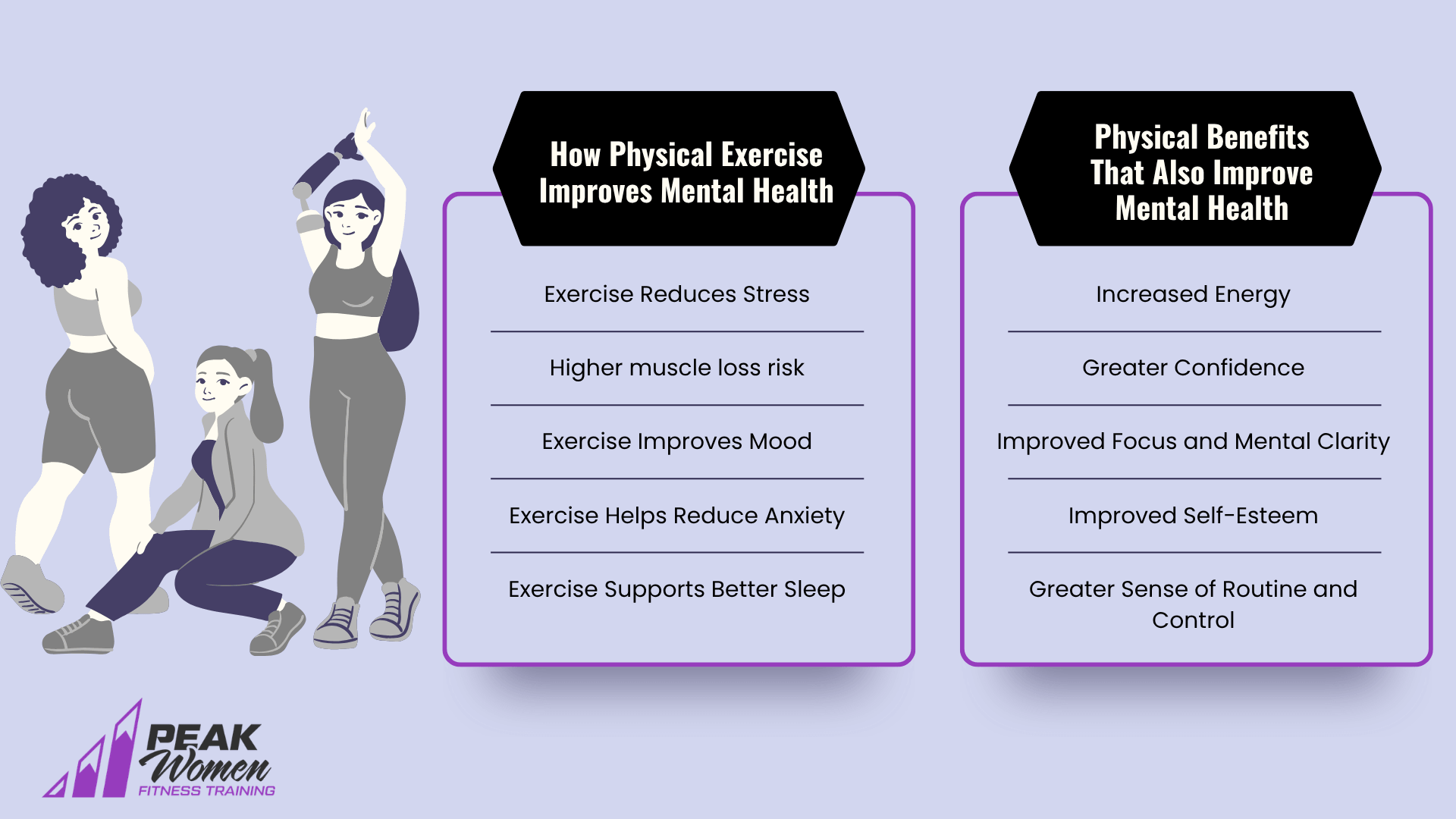
How Physical Exercise Improves Mental Health
There are many ways movement supports emotional well-being.
Exercise Reduces Stress
Stress affects both the mind and body. When you're overwhelmed, your muscles tighten, your heart rate increases, and your mind can feel constantly busy.
Exercise helps interrupt that cycle. Moving your body lowers stress hormones while encouraging relaxation, making it easier to manage everyday challenges with a clearer mindset.
Even a short workout can leave you feeling calmer and more in control.
Exercise Improves Mood
Physical activity actually encourages the release of endorphins, often called your body's natural "feel-good" chemicals.
These chemicals help improve mood, reduce feelings of sadness, and create a greater sense of well-being. Many women notice they feel happier and more energized after even a moderate workout.
That's one reason exercise is often recommended as part of an overall approach to supporting emotional health.
Exercise Helps Reduce Anxiety
When anxiety builds, it's common to experience racing thoughts and physical tension.
Exercise gives your mind something else, something positive to focus on while helping release built-up nervous energy. Activities like strength training, yoga, walking, and Pilates all encourage mindfulness through movement, helping quiet anxious thoughts.
Exercise Supports Better Sleep
Mental health and sleep really do go hand in hand.
Regular physical activity can actually help you fall asleep more easily, improve sleep quality, and help you wake feeling more refreshed. Better sleep also supports emotional regulation, memory, and stress management.
Physical Benefits That Also Improve Mental Health
Many physical improvements from exercise create a ripple effect that supports emotional well-being.
Increased Energy
Regular exercise is great at improving circulation and helps your body use oxygen more efficiently, leaving you with more energy throughout the day.
When you feel physically energized, everyday responsibilities often feel more manageable.
Greater Confidence
Strength doesn't just change your body; it changes how you see yourself.
As you become stronger, master new movements, and accomplish goals you once thought were impossible, your confidence naturally grows.
That confidence often carries into work, relationships, and everyday life.
Improved Focus and Mental Clarity
Exercise increases blood flow to the brain, helping improve concentration, memory, and cognitive function.
Improved Self-Esteem
Exercise isn't just about changing how you look; it's about recognizing what your body is capable of doing. Every workout completed, new personal best achieved, or healthy habit maintained builds confidence over time.
That growing sense of accomplishment can improve self-esteem, helping you feel more capable both inside and outside the gym.
Greater Sense of Routine and Control
When life feels overwhelming, having a consistent exercise routine can provide structure and stability. Scheduling regular workouts creates healthy habits that give your day purpose and a positive focus.
Many women find that maintaining an exercise routine helps them feel more organized, resilient, and in control, even during stressful seasons of life.

What Types of Exercise End Up Being the Best for Mental Health?
The best workout is the one you'll actually enjoy enough to continue doing consistently.
Strength Training
Strength training builds confidence while helping regulate stress hormones. Progress is easy to measure, which creates motivation and a strong sense of accomplishment.
Research also shows that strength training may help reduce the symptoms of anxiety and depression, reinforcing the connection between physical exercise and your mental health.
Walking
Walking is one of the simplest ways to improve both physical exercise and mental health. A daily walk provides gentle movement, fresh air, and an opportunity to clear your mind.
Yoga and Pilates
These lower-impact workouts combine movement with breathing and body awareness, helping calm the nervous system while improving flexibility and strength.
Group Fitness
Exercising with others provides accountability while reducing feelings of isolation. The social connection alone can positively impact mental health.
You Don't Have to Exercise for Hours
Many people believe they need long, intense workouts to see results. The truth is that consistency matters far more than duration.
Even 20 to 30 minutes of movement several days each week can improve mood, reduce stress, and support long-term mental wellness.
Some days, a walk around the block may be exactly what your body needs.
Why Your Environment Matters
Where you exercise can significantly affect whether you stick with it. Many women avoid gyms because they feel intimidated, judged, or uncomfortable.
That's why finding a welcoming environment matters.
At our women-only gym in Troy, MI, you'll find supportive coaching, encouraging members, and a space where you can focus entirely on yourself without comparison or pressure.
Feeling comfortable makes it easier to stay consistent, and consistency is what creates lasting change.
Physical Exercise and Mental Health at Every Stage of Life
The connection we see between physical exercise and mental health remains important throughout every stage of adulthood.
Whether you're:
Beginning your fitness journey
Recovering postpartum
Managing a demanding career
Navigating perimenopause or menopause
Looking to stay active as you age
Regular movement helps support both physical strength and emotional resilience.
Your workouts may change over time, but the benefits remain.
Support Your Mental Health Through Movement with Peak Women
At Peak Women, we believe exercise should leave you feeling better, not defeated.
Our women-only gym provides a welcoming environment where every woman can build strength, improve confidence, and prioritize both physical and mental well-being.
Whether you're brand new to exercise or returning after time away, we'll meet you wherever you are, and we’ll be here to help you build habits that fit your life.
Feel Better From the Inside Out
Movement helps reduce stress, improve mood, increase confidence, and support better sleep, all while making your body stronger and healthier.
You don't have to be perfect. You simply have to keep showing up.
If you're looking for a supportive women-only gym where you can focus on improving both your physical and mental well-being, contact Peak Women today to schedule your free consultation and first workout.
Frequently Asked Questions About Physical Exercise and Mental Health
How does physical exercise improve mental health?
Exercise helps regulate stress hormones, increases endorphins, improves sleep, and boosts blood flow to the brain. Together, these changes support better mood, focus, and emotional well-being.
What type of exercise is best for mental health?
Strength training, walking, yoga, Pilates, cycling, and group fitness all support mental health. The best choice is one you enjoy and can do consistently.
Can exercise help improve depression?
Exercise has been shown to help reduce symptoms of mild to moderate depression and is often recommended alongside other treatments. It can improve mood, energy, sleep, and self-confidence.
Does strength training help mental health?
Absolutely. Strength training can improve confidence, reduce stress, support hormone regulation, and provide a healthy sense of accomplishment as you progress.
Why is a women-only gym helpful for mental health?
Many women feel more comfortable exercising in an environment without judgment or comparison. A supportive women-only gym can make it easier to stay consistent, build confidence, and enjoy the process.